

Modus Operandi
noun; a particular way or method of doing something, especially one that is characteristic or well-established.

I frequently get asked about my “ingredients”. What elements do you use? How do you attach them? What exactly are these materials? Where do you procure them? What is that “stuff” in-between each piece?
The majority of my art is stained glass based. Over time, I’ve amassed a vast amount of glass. (That’s a fun line, try it out loud!) Stained glass can be purchased from wholesale glass distributors or small mom & pop shops. Once or twice a year, I’ll make a special trip up to Denver to visit D&L Glass. Let me warn you, this is a very dangerous place. Dangerous in the sense that, my pockets weep after I walk out of those doors. A variety of glass artists shop here. They sell glass in scrap, sample sets, small 4x4” pieces, 12x12” sheets, and on up to 8x8’ sheets. Being a mosaicist, I typically purchase glass in 12x12” size, or thereabouts.
Three vital tools on my workbench are used to cut & shape said glass: (below, from left to right) running pliers, a pistol-grip glass scorer, and wheeled nippers.
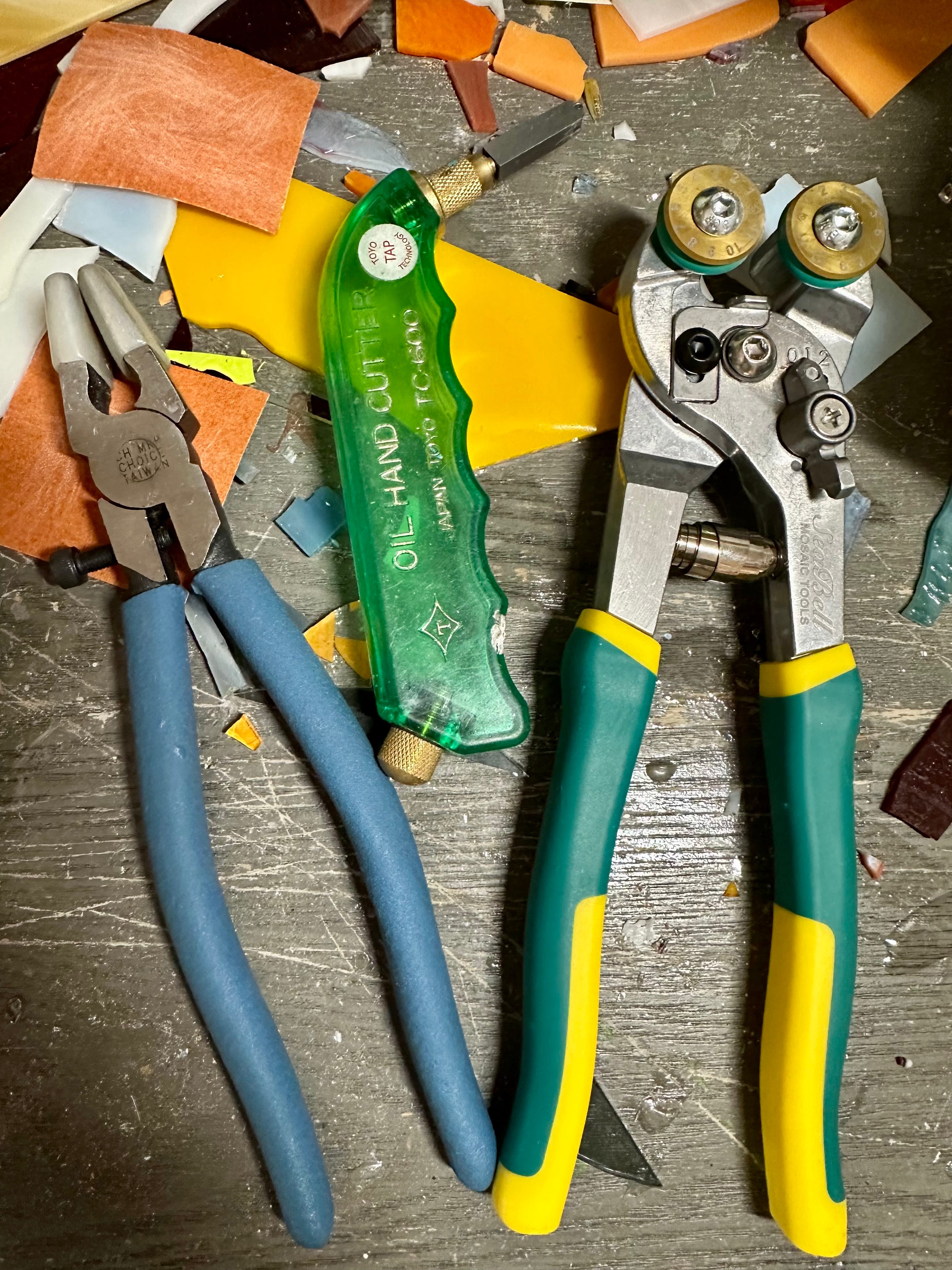
Gosh, I could go so deep into the subject of cutting and shaping glass, but I’ll save you the time for now. If you’re at all curious about learning the basics, Mosaic Mentoring on Facebook and Treasury Road on YouTube are fantastic sources of information!
*Did you know that glass is made from sand? That being said, the cost of glass is continually rising due to depletion of this natural resource. Sand is being extracted far more quickly than it can be naturally replenished. Here is an interesting documentary about this global issue… and it was released in 2013!
Attaching glass and other elements to bone can be somewhat tricky. Being that bone is a naturally uneven surface, each piece of glass must be cut, shaped, and fitted in such a way that it lays completely flat. Once I’ve done so, I typically use an adhesive called Weldbond. This is a water based glue, which is only appropriate for indoor mosaics. There are other adhesives that serve best for outdoor purposes, like thinset. Depending on what other elements are included in my designs, I might choose something different. If I’m attaching large beads, crystals, or any three dimensional elements, I’ll utilize Apoxie Sculpt, which is a two part clay-like compound.
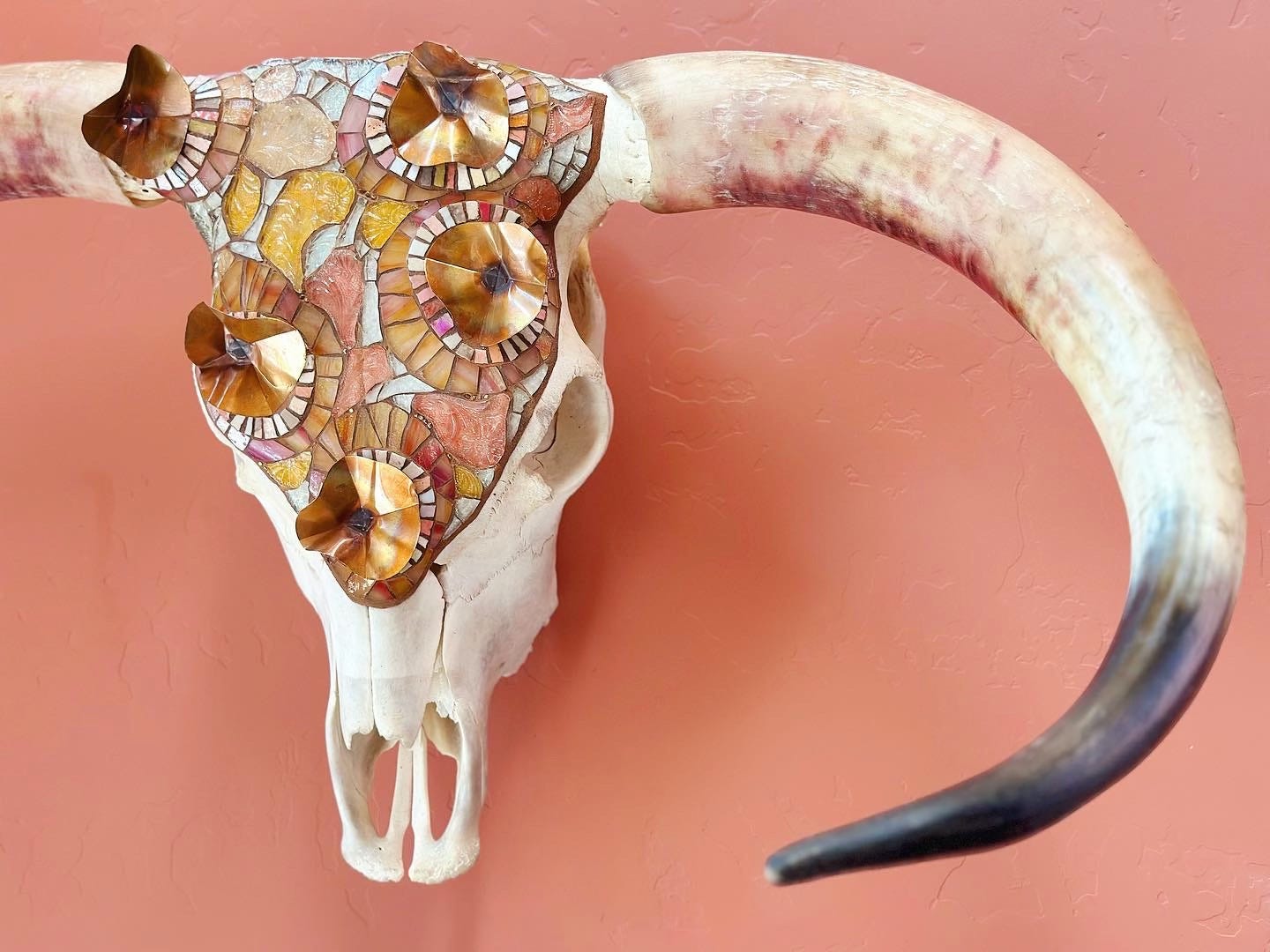
I am somewhat of a junk hoarder. But to me, my junk isn’t actually junk. I’m talking about the elements beyond glass here. Thrifting is one of my favorite pastimes. I truly enjoy wandering through flea markets, thrift stores, and yard sales in search of unique treasures. These treasures (treasures, not junk!) frequently become elements in my art. For instance, the copper flowers on ‘Ming Ting’ below were part of a decorative wall sconce that I disassembled.
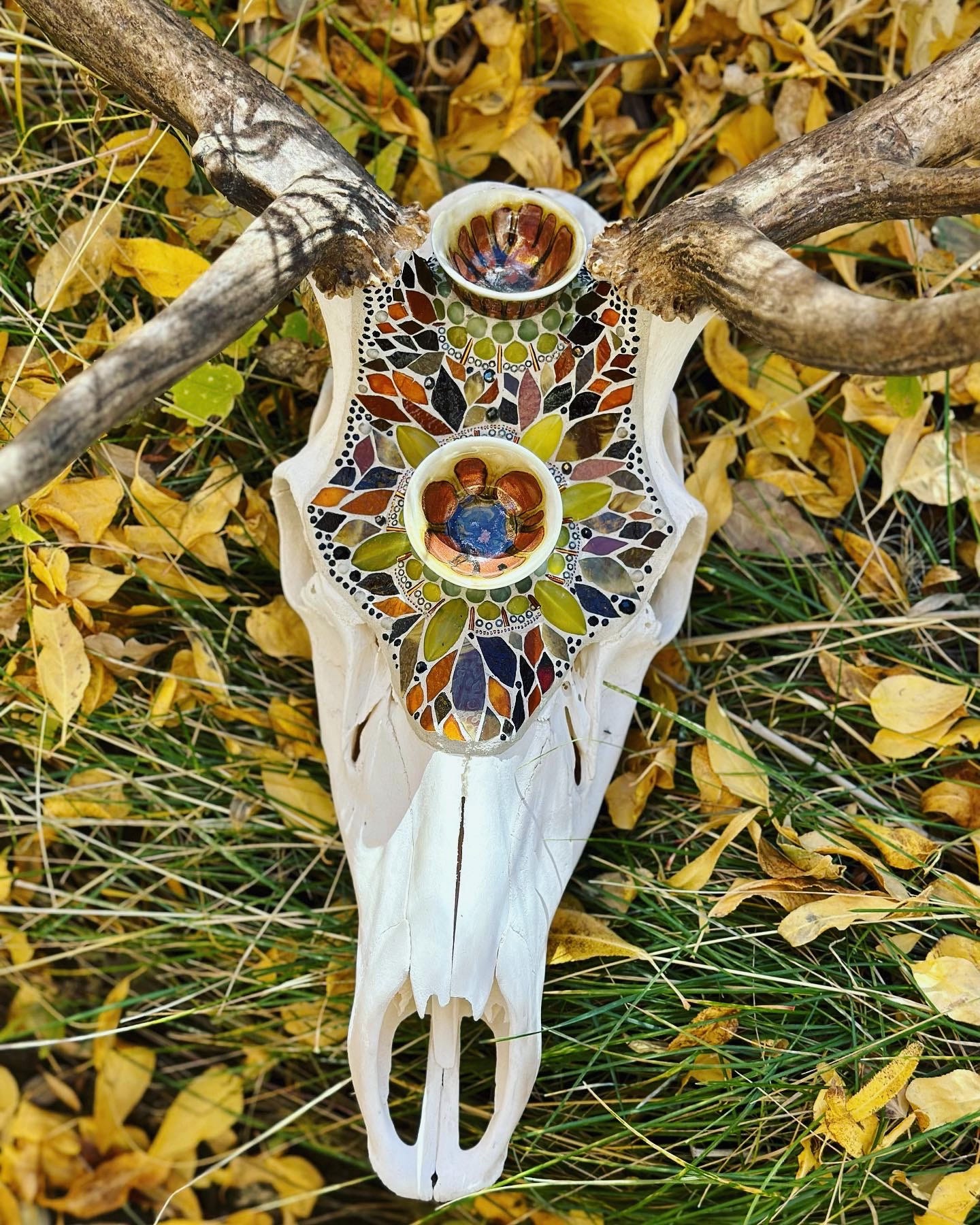
…and I just couldn’t pass up this matching set of Japanese teacups for ‘Senchadō’:
For ‘Strength in Tenderness’, I purchased and disassembled some handmade metal flowers from local artist Shelby Cox to incorporate:
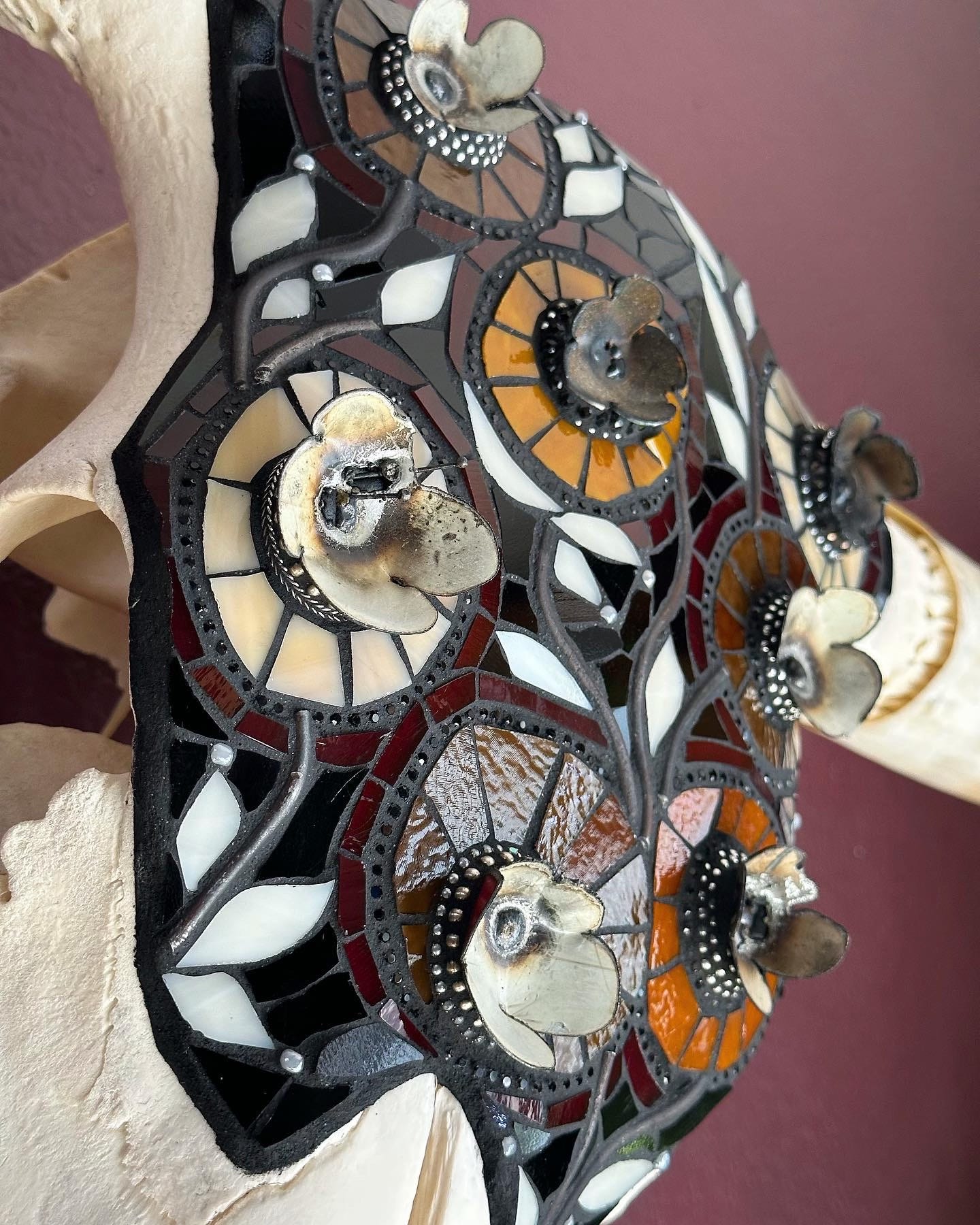
Often, friends and family will send me collections of retired or broken jewelry. Anyway, you get the point. It’s so fun and satisfying to give pretty little things new life!
This is getting long winded… but, in short conclusion, almost every piece is grouted to finish. Grout: noun; a mortar or paste for filling crevices, especially the gaps between wall or floor tiles. This gives each piece a finished look and protects the overall design for years to come.
With my third SubStack published, I am quickly realizing all of the intricacies of this artform that I have to share! I look forward to taking the time to resonate and remind myself that all of this is about so much more than a finished piece. It’s about the journey… the searching, the learning, the mistakes, the successes, the new ideas, the people I meet along the way, and most importantly, the joy.
Thanks so much for reading,
Hannah
Thank you for sharing! My collection (not "junk", as some would call it) is so inspiring to me! I often start there and work backwards. I learned something new from your blog! I didn't know about the sand required to make glass. Keep writing! You've found another talent :)
Very good overview of your art process. Look forward to more!